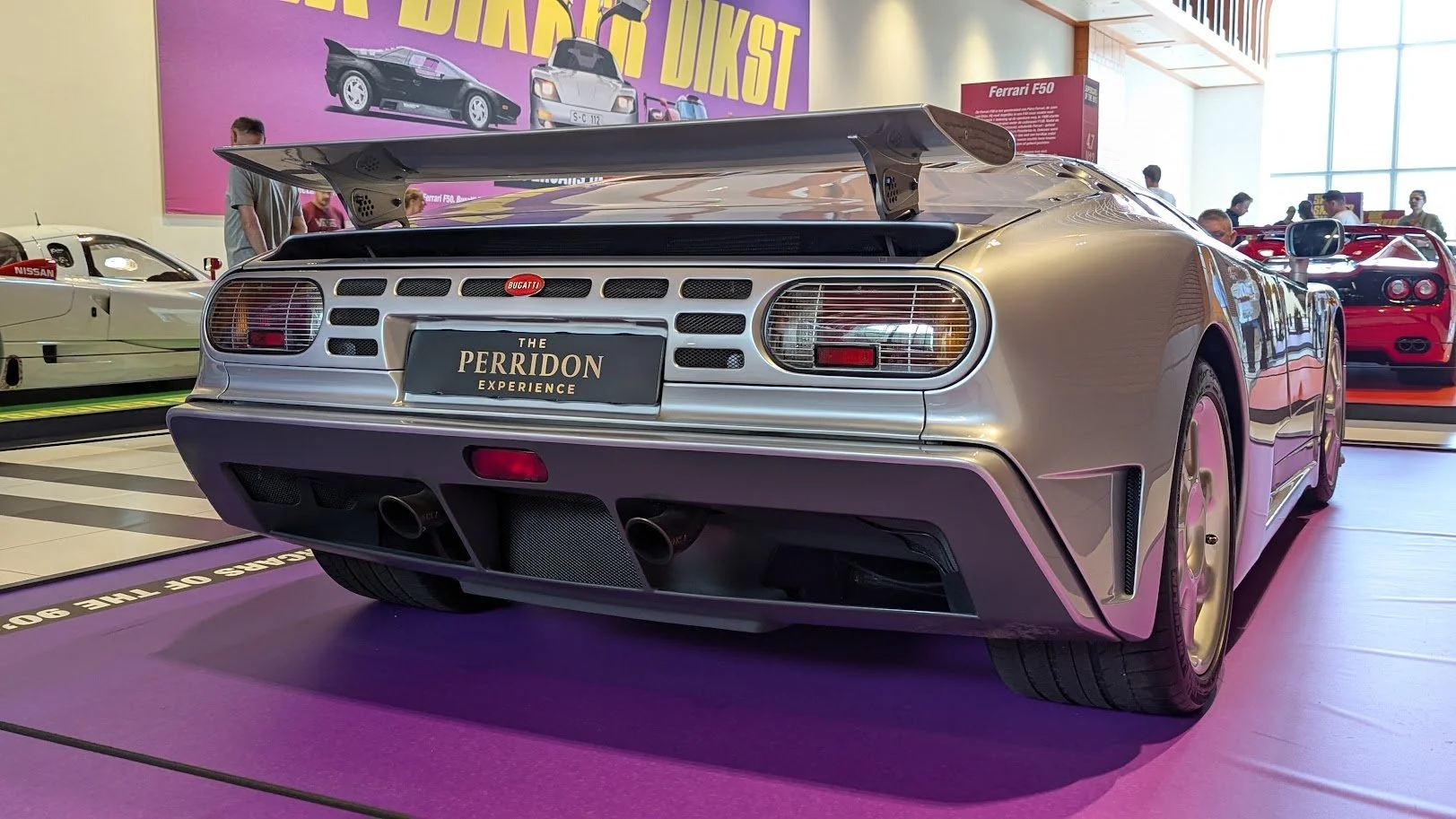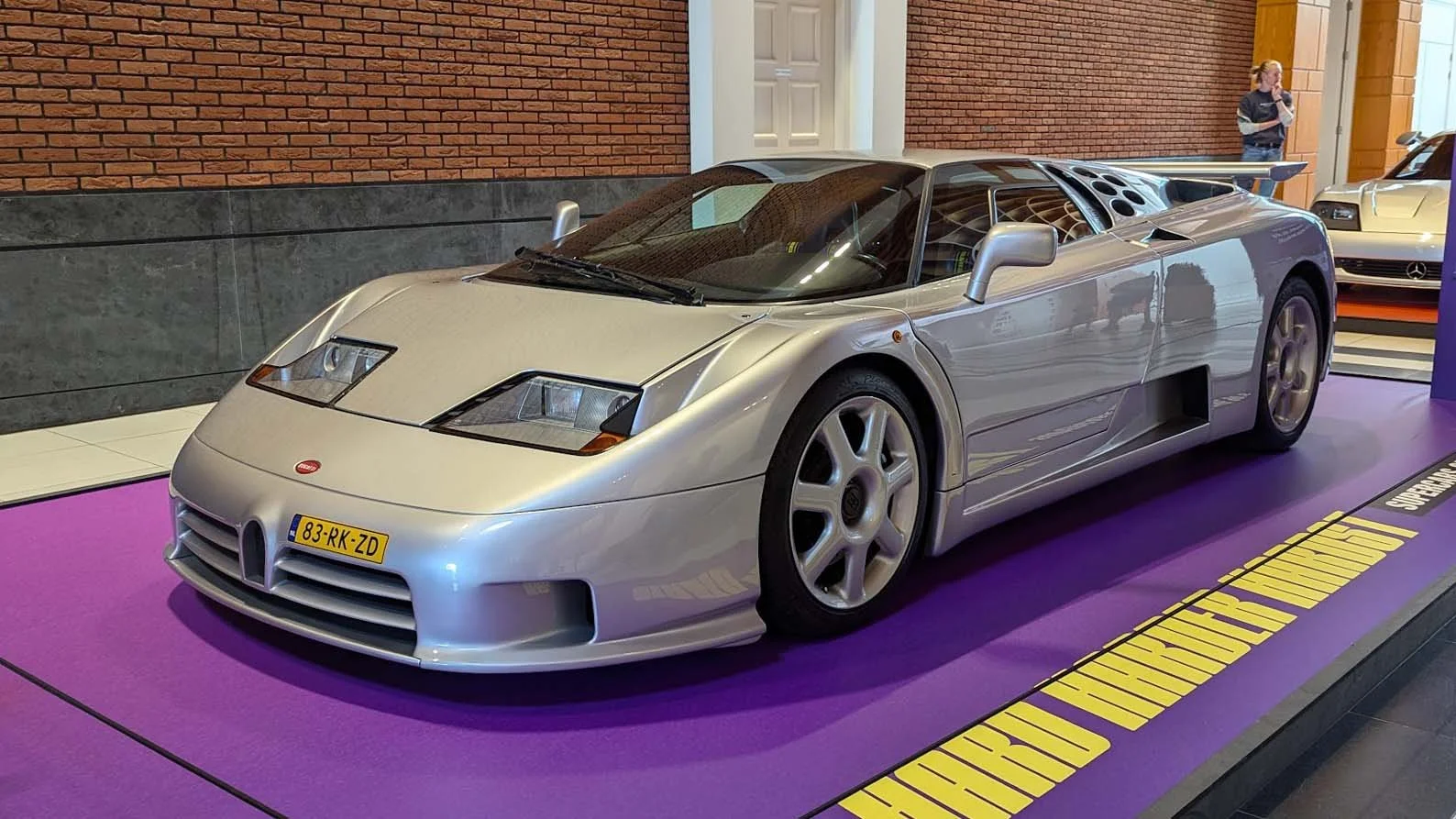
Troubled development. It’s hard to find a supercar with a history more dramatic than this. In 1987, after 35 years of dormancy, the Bugatti brand was acquired by Italian entrepreneur Romano Artioli. Very soon afterwards, the conception of a new supercar worthy of the name had begun at the new facility in Modena. The effort required to build a new car that Artioli saw as the future of Bugatti demanded appropriate specialists. Initially, Bugatti proposed that the person to be responsible for bodywork design and manufacturing would be Giuseppe Bertone, but Bertone declined after learning that Artioli and another potential investor were involved in the distribution of Ferrari cars in Germany. The person who instead provided the first prototype designs was Marcello Gandini. His work was fairly well-received, but Artioli was not completely content with its angular style, and so an alternative version with softer lines and some mechanical changes was proposed by Gandini. Still not up to Artiloli’s complete satisfaction, the second design was slightly altered by Gianpaolo Benedini, who was also responsible for the interior. Chassis structure and materials were also a subject of hot debates and went through several tests. After looking at both aluminum and composite materials, carbon fibre was eventually chosen, and the car received a full carbon monocoque, an extremely innovative technology at the time. The engine was a 3.5-liter V12 developed by Bugatti and bolstered by 4 turbochargers to increase torque and eliminate the turbo lag, resulting in a unit that ended up producing 553 horsepower.
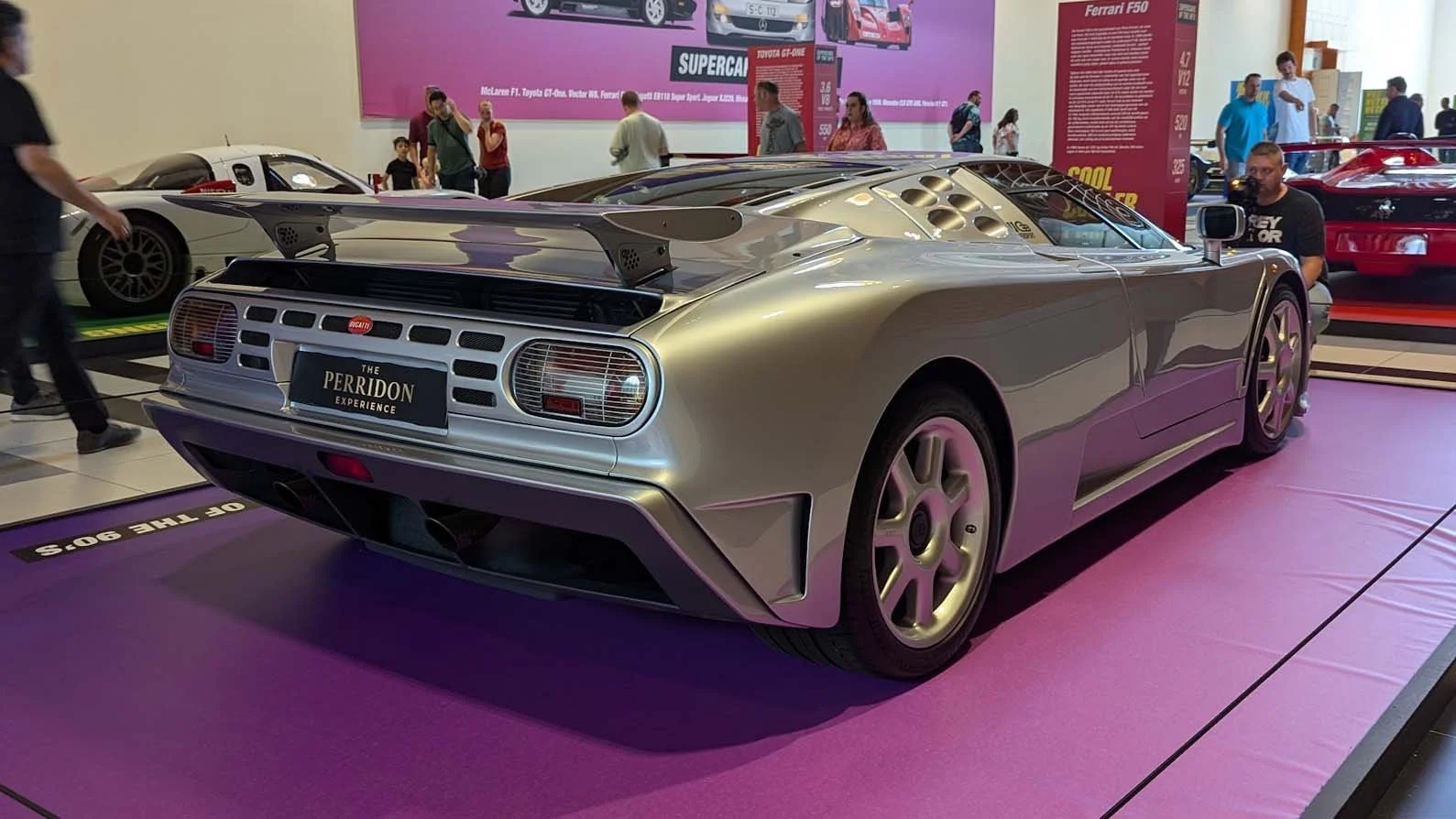
Delayed appreciation. Six months after launching the standard EB 110, a more powerful and lightweight version was unveiled – the EB 110 Super Sport. Thanks to more aluminum parts having been replaced with carbon fibre, and new magnesium wheels, the car became 202 kilograms lighter. The powertrain was upgraded with the new ECU, allowing the engine to produce 603 horsepower. Only 30 production Super Sport models were built and we are happy to tell you about this specific one. This Super Sport painted in Grigio Chiaro was ordered in July 1993 by Dr. Bernd Pöhlmann, a German car enthusiast based in Bavaria. In his order, besides requesting even more power output, he specified blue anodized aluminum pedals, a gear shift knob, window switches, and blue seatbelts to replicate those of an EB 110 prototype car. In October 1997 the car was sold to Jürgen Jaudszims, a car collector based in Hamburg. In 2003 it changed owners once again, this time having been acquired for 260,000 € by Jan Van Stuivenberg, a Dutch car collector, who later registered the car in the Netherlands and put an additional 9000 kilometers on the odometer. In 2013 the car was sold again to another Munich-based owner who drove and serviced it regularly. In 2020 the car was sold via Christian Jakob Automobile, and in 2021 it found itself at a Bonhams auction in Le Zoute, Belgium. The car was sold for 2,242,500 € to Dutch car collector Michel Perridon and is now being displayed all around Europe at different shows and events as a part of The Perridon Collection.
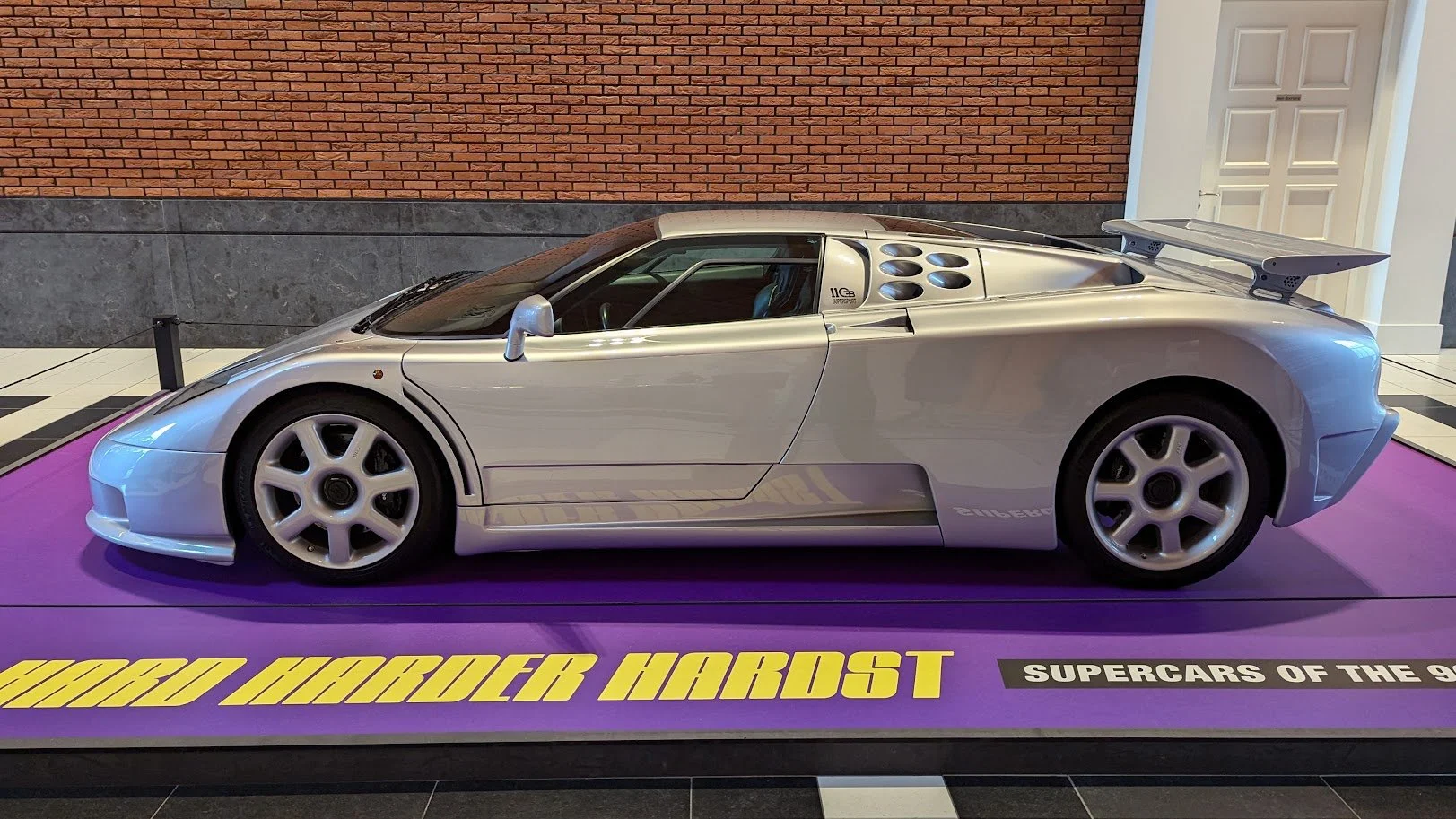
The French Italian. The EB 110 project had many internal controversies in every step of its production and the disagreements on the design, chassis structure, and materials led to the car having 3 technical directors at different stages of development and production. The first was Paolo Stanzani, who was later replaced by Nicola Materazzi, and finally Mauro Forghieri. Each one of them put a piece of their mind and soul into its creation, and the final rendition turned out just as curious. Unfortunately, EB 110 was the only complete project of Bugatti’s Italian era, but there were many more great things to come in the next decade.