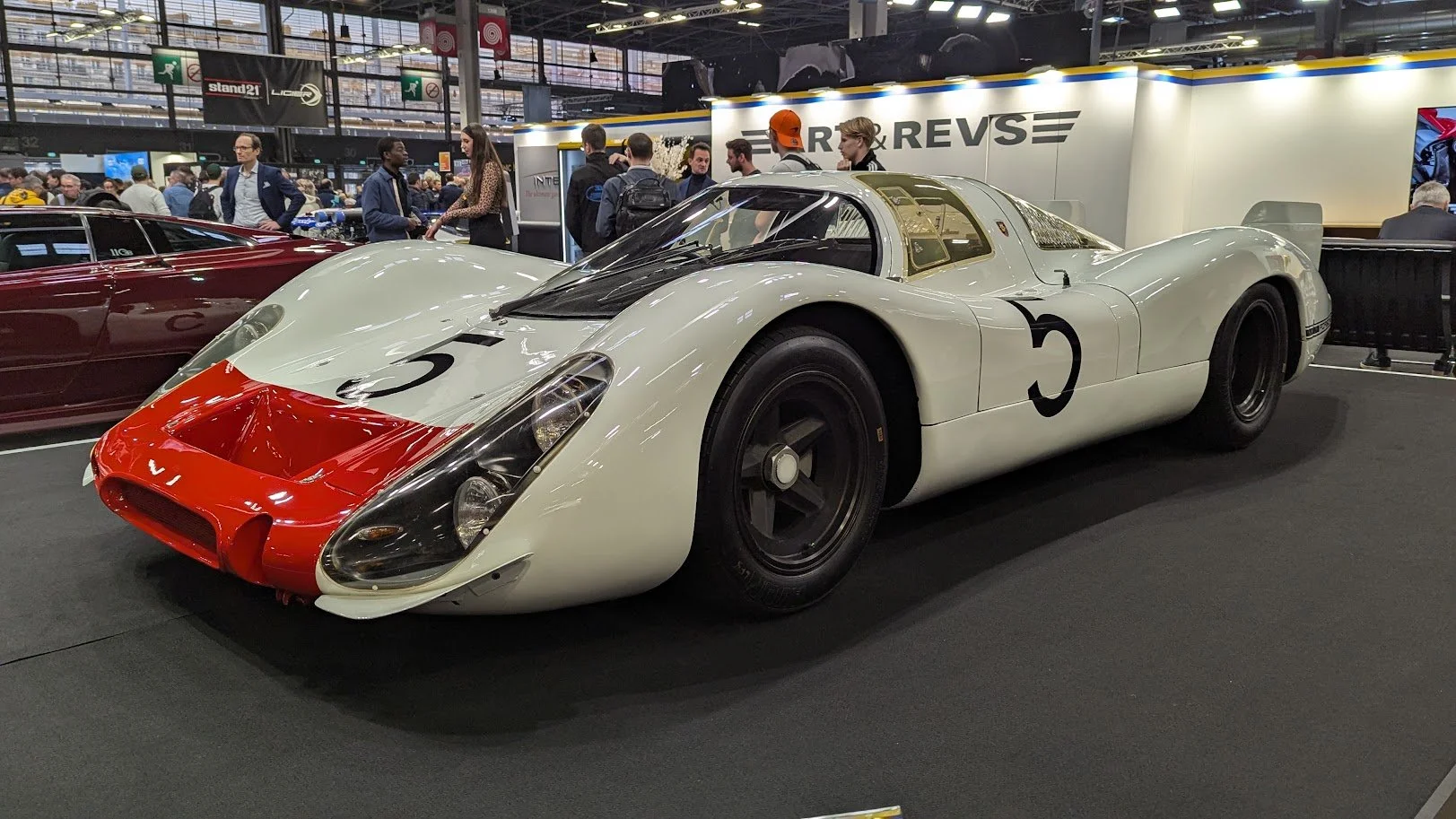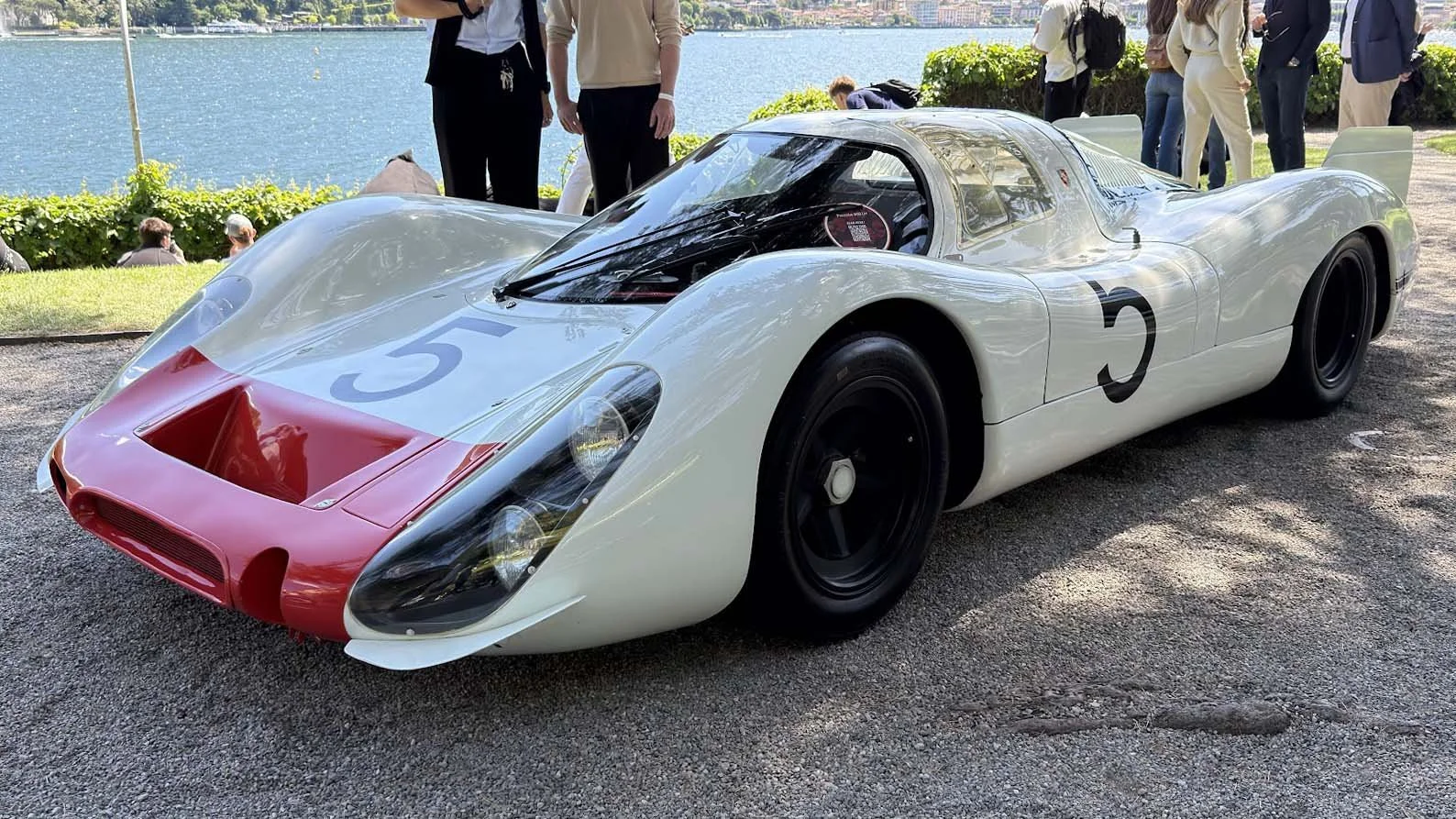
Necessary changes. In 1966 Porsche started implementing fiberglass bodywork into its prototype race cars after “plastic body” technology had proven itself with the 904 Carrera GTS. After two remarkably successful seasons with the 906 and 907, the Porsche 908 took up the baton. The first iteration of the car was a coupe designated as 908/01 and it existed in two versions - LH (Langheck) and K, also known as KH (Kurzheck) meaning long tail and short tail - and, unlike its predecessors, the 908 now sported a 3-liter engine. Porsche engineers predicted a change in FIA World Championship regulations that would reduce the maximum allowed engine displacement in prototype class to 3 liters and began the development of the new motor before the official announcement. The first version of the engine that 908/01 cars had been equipped with produced 335 horsepower, which was a substantial increase compared to 2-liter units in the 906 and 907 models. This raised the need for a new gearbox to be developed that could withstand the power, and a new 5-speed transmission was created. The changes that awaited the 908 that differentiated it from the 906 and 907 did not stop there. Initially the new car was built with a steel chassis structure, similar to the one found in the 907. However, a tubular aluminum chassis that was used in one of the 908 K cars turned out to have made it 20 kilograms lighter, and subsequently the new chassis was incorporated into all 908 race cars built after that discovery.
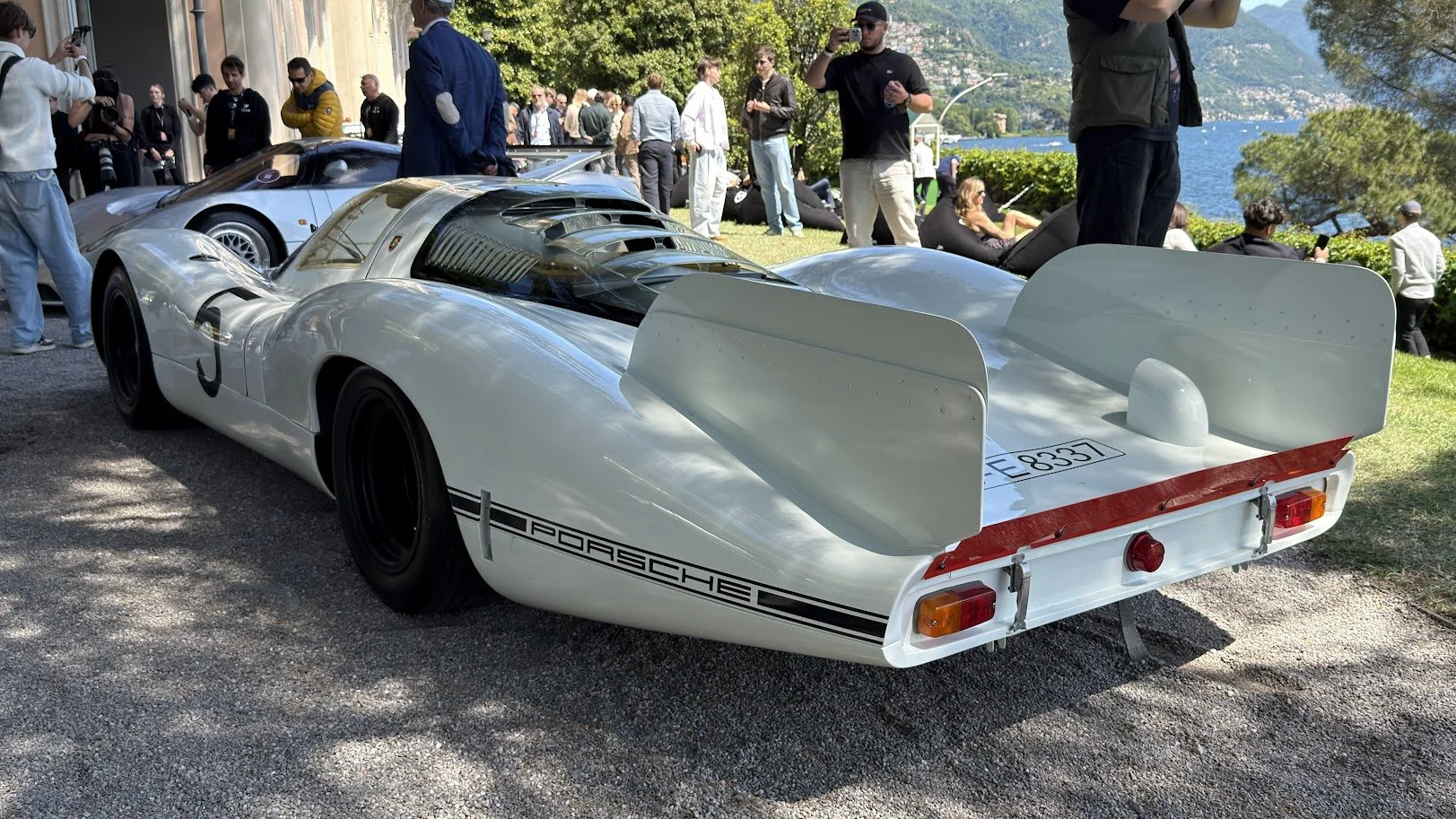
Payment in kind. Before that change, however, two 908 LH cars had been constructed with the old steel chassis, and one of those cars is presented by us here today. This 908 is one of 18 long tail cars originally built, and one of only 5 surviving to this day. It debuted in 1986 in the Monza 1000km race, driven by Ludovico Scarfioti and Gerhard Mitter, and finished 11th overall and 3rd in the 3-liter prototype class. A month later it participated in the Spa 1000km as a test car, after which it was written off and sold to Hans-Dieter Dechent, a former racing driver and then manager of the Martini Racing team. In May 1971 the car was handed over in damaged condition to Gérard Larrousse, a Martini Racing driver as a payment for his work. Larrousse kept the car for 43 years until it was restored by Freisinger Motorsport in 2014 and sold. The new owner was a racing driver from Monaco, Claudio Roddaro, with whom the car participated in a handful of historic racing events. In 2023 it was sold via The Six – Racing Car Auctions to a new owner, who had the original bodywork restored. In March 2026 the car was sold again via Arts & Revs.
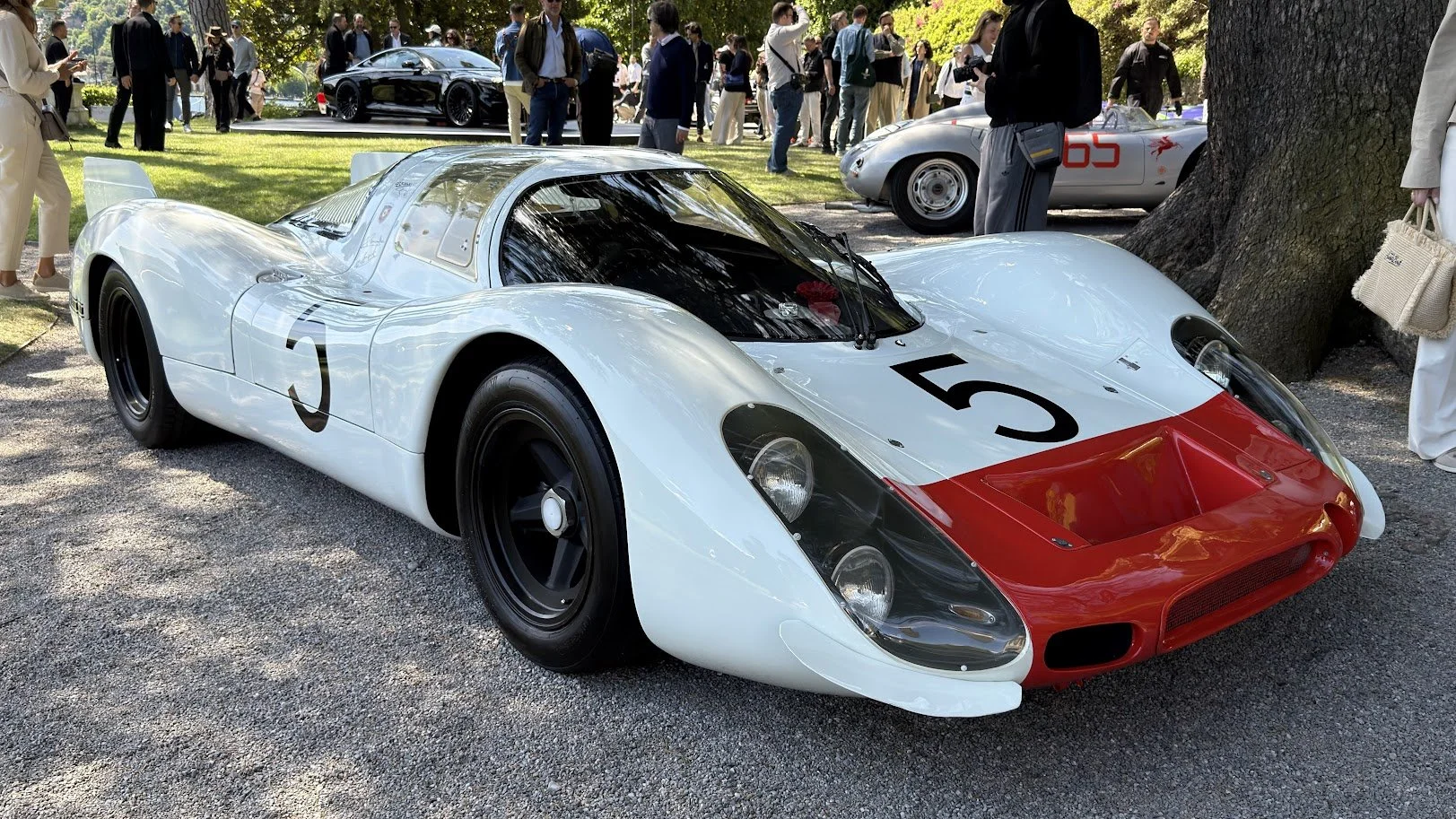
A survivor. Over the next few years after its debut, the Porsche 908 had gone through multiple revisions with all sorts of changes to bodywork, chassis, aerodynamics and cooling, and even a new engine. Very few of them survived to this day, and even fewer can be seen on display or in action during historic racing. Seeing this particular example for the second time provided a great opportunity to appreciate the details and its immense presence once again.