New player. In the 1960s the worldwide automotive market was expanding rapidly, filling out all the market niches it could find, including the more accessible sportscar segment, a fair share of which was being taken by American manufacturers. Some of the cars, despite remaining exclusive to US buyers, were still selling in huge amounts, such as the Pontiac GTO, which only found itself in other markets a few generations later. Ford was not a quiet spectator either, and aimed at a wider audience including the buyers in Europe and South Africa; that is when it introduced the Ford Mustang. By 1969 more than two million Mustangs were sold worldwide and this gave Ford solid ground to consider introducing a car that was somewhat similar in spirit but tailored more towards European markets. A combination of attractive design and practicality proved itself, and the brand new Ford Capri became a hit. Four seats, flashy long nose fastback exterior, and a wide range of engines with smaller displacement made the car widely successful. Not everyone was keen on the powertrain however, and a few months later in 1969 two more engine options became available – a 2.3-liter and a 3-liter V6. In September 1971, a 2.6-liter version was introduced carrying the name Capri RS2600, which was used as a homologation model for the RS2600 race car. In a similar manner in 1973, the Capri RS3100 was released serving as a basis for the FIA Group 2 race class car, much like the RS2600 was. Before that however, the 2.3-liter 2300GT already participated in Rallye Lyon-Charbonnières-Stuttgart-Solitude 1969 rally and other road events, later joined by the 2600GT.
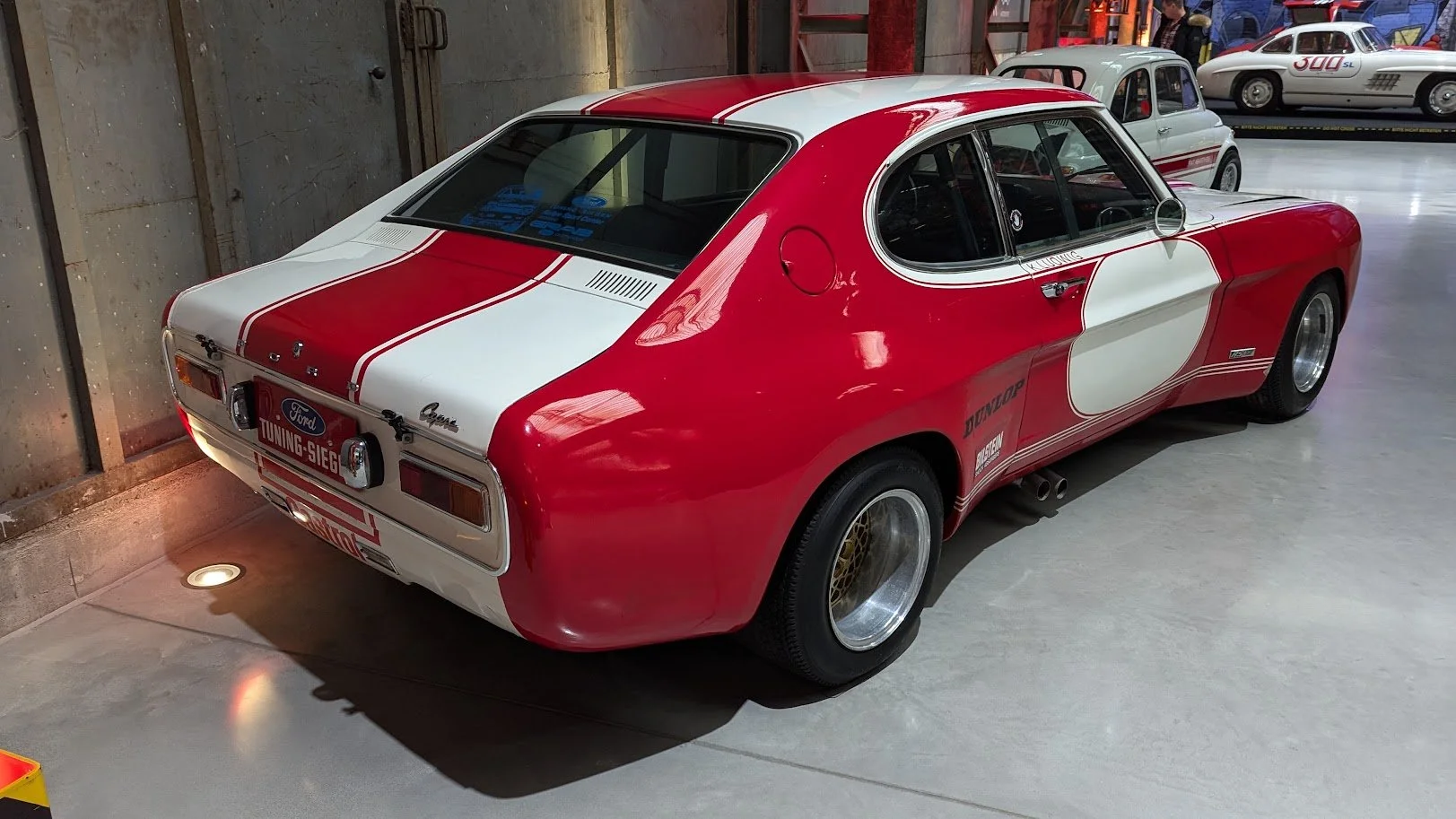
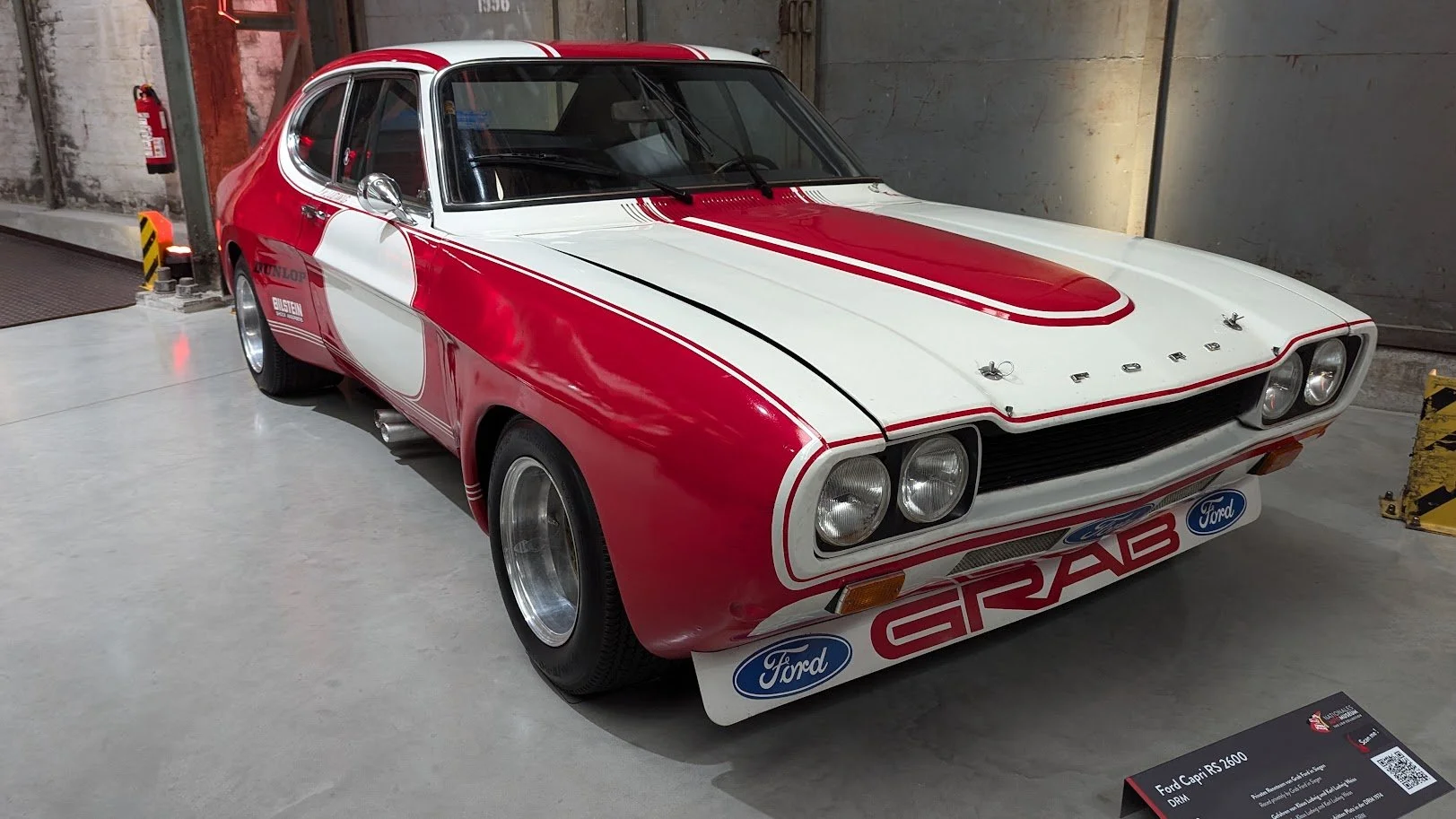
European success. It was the release of the RS2600 when things went beyond the first competition use of Capri, and Ford started relying on Capri as one of two GT racers along with the Escort. In October 1970, the RS2600 was officially homologated and therefore allowed to compete in Group 2 races. The Ford Advanced Vehicles Operations facility was established in 1969 for the purpose of homologation and building high performance production cars. After being built and upgraded several times, by 1973 the RS2600 was an extremely robust race car, powered by a 3-liter Essex V6 that officially gave it 320 BHP at 7600 RPM. Their GT racing debut was in 1971 at Autodromo Nazionale Monza and although it wasn’t a success, just a month later they began their winning streak. The 1971 and 1972 seasons turned out spectacular for Ford fans with multiple 1-2-3 finishes at ETCC qualifying round at Salzburgring in 1971 and 24 Hours of Spa in 1972. The last season for the RS2600 Capri was 1973, when BMW caught up to Ford teams’ pace with 3.0 CSL which turned out to be a very sophisticated competitor. After 1973, the Capri RS2600 continued racing in smaller competitions such as Deutsche Rennsport-Meisterschaft, in which this exact car we are presenting today participated. As a matter of fact, this car finished in 3rd position in 1974 in the hands of Bernhard Grab and Ford Tuning Siegen team driven by Klaus Ludwig.
Small car with a big name. While having gained popularity and media coverage mostly in relation to European racing championships, the Capri RS2600 remains a significant chapter in Ford motorsports history in general. Its contributions to that history include multiple podium finishes at ETCC, endurance races at Spa, Nürburgring, Brno, Monza and others. Notably, it also played a big role in careers of many renowned drivers among which are Jochen Mass, Hans-Joachim Stuck and Klaus Ludwig.